Every Summer
Or, How to Cultivate Family Traditions


We all have places in the land that feel like ours. Maybe it’s the golden light, the hint of wind in scrubby oaks, the marshy scent in the air. The feeling can descend like a bolt of lightning, love at first sight, or accrue with repeated visits. Just as we have relationships with people, so we are in relationship with place; it’s a relationship you can build, like any other, over time.
I am writing to you from one such geographical home away from home for me—Wellfleet, Massachusetts—and our annual intergenerational pilgrimage to Cape Cod. This is a place I spent summers as a child—my parents bought a house here when I was eight, four years before they divorced—and lost for a time. When my husband and I moved in together at 22 and discovered the Cape was a place we both adored as kids, we returned together, and we’ve returned every year since. These returns, this yearly nostos, or homecoming, has become both a sacred rite and an organizing principle of our family life.
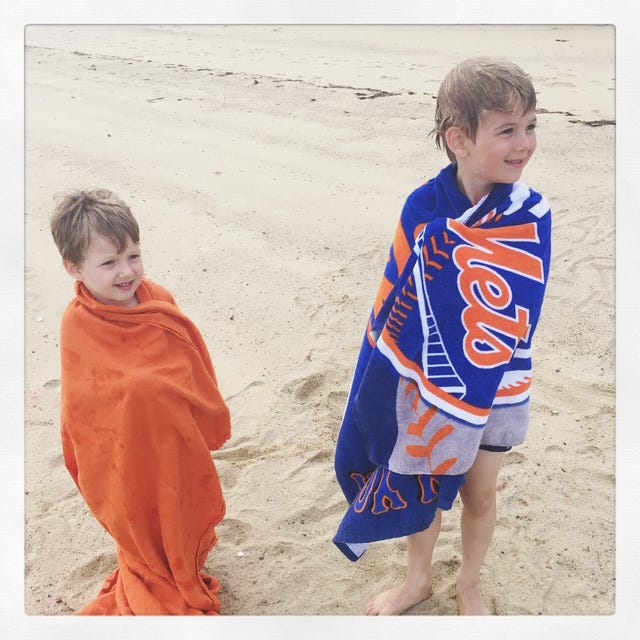
Each summer we load up our car with the bike rack and the four bikes, the roof carrier and the inflatable paddle board, the ancient crumbling boogie boards, the Kadima and the soccer ball, and all the books we might read in a week—my mother refers to this packing strategy as traveling with “our library and gymnasium”—and we drive slowly along Route 6 traffic to converge with our family from other parts at the almost wrist of this arm-shaped peninsula.
Every time, my husband and I, who in spite of deep compatibilities that have sustained us through more than two and a half decades of togetherness, seem to approach every trivial logistical decision from opposing camps the morning of our departure. We promise this will be the year the packing and loading does not result in relentless squabbling. We have yet to succeed in this admirable goal. Every marriage has its danger zone, those subjects or tasks that seem to bring out diametrically opposed neuroses, habits and behaviors, and the packing of the library and gymnasium is ours.
With apologies to our children, the first half of our drive is grumpy and disgruntled, a hangover from the failed compromises and differing philosophies, until the salt air streams in through the windows as we approach that giant sand spit stretching out into the Atlantic. Our shoulders unknot. Our hair blows in the briny breeze, the reset buttons for our nervous systems activated. Remember that place? One of our kids will call from the backseat. Oh, has the food truck moved?
The balm of the familiar, of only minor changes, carefully observed.